Electrician Jobsite English & Troubleshooting
Electrical Troubleshooting Flowchart: Evidence & Stop Points
Use an evidence-first electrical troubleshooting flowchart to separate urgent hazards from symptoms, record fault scope, identify stop points and prepare a precise handoff without guessing a failed part.
Page highlights
- Use an evidence-first electrical troubleshooting flowchart to separate urgent hazards from symptoms, record fault scope, identify stop points and prepare a precise handoff without guessing a failed part.
- An original flowchart, evidence checklist, stop decision and fault-handoff template for learning.
How should electrical troubleshooting begin?
Begin by separating an immediate hazard from an ordinary symptom. Heat, burning odor, arcing, smoke, water near energized equipment, tingling or shock, damaged enclosures and an immediate repeat trip are stop signals—not prompts to keep testing.
If no red flag is present, record what happened, when it happened, which loads or locations are affected and what the protective device shows. Those observations define the fault scope; they do not identify a failed part. Opening equipment, electrical measurements and repairs remain with people authorized and qualified under the applicable procedure.
Follow the evidence-first flowchart
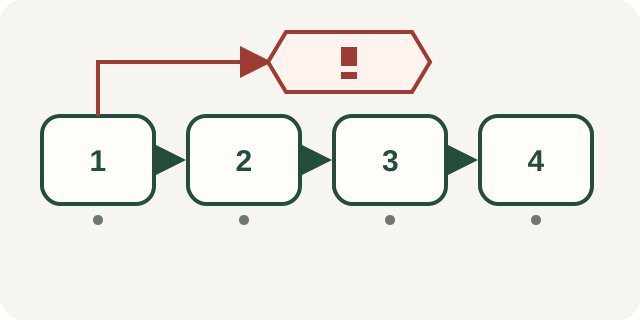
Record four evidence fields before naming a cause
- Symptom: exact observation—dead, intermittent, hot, noisy, tripped or visibly damaged—without converting it into a diagnosis.
- Scope: one load, one point, several downstream points or a wider area. Record only what is already known; do not create a new hazard to compare locations.
- Timeline: first occurrence, duration, whether it followed recent work, moisture, a new load or a protection event.
- Protection and environment: breaker/RCD/GFCI state, odor, heat, water, damage and any manufacturer fault indication visible from a safe position.
Classify the scope without guessing the failed component
A symptom that was already observed to follow one appliance points toward that load, cord or its interaction with protection. A symptom that stays with one location points toward the circuit or point. Several affected points can indicate a shared upstream condition. These are categories for a qualified handoff, not proof of a specific internal fault.
Stop points that override the rest of the flowchart
- Shock, tingling, smoke, flame or active arcing: protect people first, restrict access and use the site's emergency and isolation process.
- Water, scorching, melted parts, exposed conductors or a damaged enclosure: do not touch, open or re-energize the equipment for another check.
- A protective device trips again immediately: leave it open and identified. Repeated resetting or fitting a larger device does not diagnose the fault and can increase risk.
- Unknown sources, multiple supplies, stored energy or an unclear work boundary: stop until the authorized procedure controls every source.
Try the stop-or-continue check
A breaker trips immediately after a new load is connected. It is reset once and trips immediately again. Which next step fits the flowchart? A: keep resetting to see whether it clears. B: install a larger breaker. C: leave the circuit open, record the load and timeline, and hand it to a qualified person.
Check answer and feedback
C. One reset has reproduced the fault and established the stop boundary. More resets add little useful evidence; a larger breaker changes protection without identifying the cause. Record the affected load, time and visible conditions, then escalate under the applicable isolation procedure.
Use a neutral fault-handoff template
Separate observations from hypotheses. The template is edited only in this page and is not submitted or saved by the site.
Sources, scope and related practice
Editorial source check: 29 October 2026. This teaching page organizes evidence and stop decisions. Local law, the authority having jurisdiction, the employer's energy-control procedure, equipment documentation and a qualified person's judgment control actual work.
AI study helper
Copy this page's public material to ask an AI tool for terminology explanations, bilingual comparisons or revision questions. Keep the sources and safety limits in its answer, then check against this page.
A study question to try
Using this material, explain three key terms in English and Chinese, then give me one comprehension question. Keep the original sources, jurisdiction limits and stop-work conditions. Say when the material does not answer something. Do not provide live electrical work instructions.
Copies public content only, without your answers, report drafts or learning progress. Nothing is sent automatically to an AI service. AI can make mistakes; it cannot verify site safety or authorize work.
Maintained by Elect Learn · Page updated: · First published:
No independent professional review is recorded. Cited sources do not imply review or endorsement by those organizations. Sources and review policy
Page Markdown · Page JSON · AI content index
This site provides learning materials and does not replace local rules, permits, site procedures, or qualified judgment.